
FORMULATION/APPLICATION QUALITY
Overview
TOOL DESCRIPTION
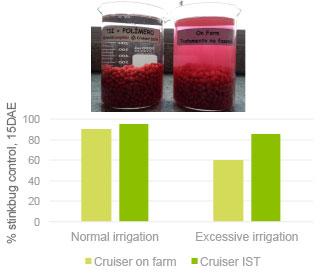
We take samples of soybean seeds industrially treated (with good polymers), and seeds treated on farm (without polymers) in separate cups.
We add some water to these seeds, and gently stir them.
The water quickly turns strongly colored in the on farm treatment. With industrially treated seeds, it happens quite slower and lighter.
This demo works visually much better for soybean than any other seed, so we use this crop as a model, even when we want to talk about other crops
ALREADY ESTABLISHED FOR:
Soybean (the best seeds to use for the vizualization)
HOW IT IS USED
- We explain to the growers that the additives used in industrial seed treatment help to keep the treatment close to the seed and the seminal roots for longer time, specially under wet conditions. It can help products to deliver longer residual effect against pests.
- This is especially important for second season corn in Brazil, sowed in the middle of rainy summer, under high pressure of stinkbugs, that must be controlled by Cruiser for 10-15 days
- In this case, we often present this demo together with some trial data, proving that industrially treated corn seeds (with polymers) can deliver better residual control than corn seeds treated on farm (without polymer)

QUICK FACTS
- FOCUS: FORMULATION, APPLICATION QUALITY
- COST: $
- TIME TO PRODUCE: 15 MINUTES
- MOBILITY: PORTABLE
- LEVEL OF COMPLEXITY: EASY
- ENVIRONMENTAL CONDITIONS: NOT RELEVANT
- CROP: ALL CROPS

CONTACT
andre.graci@syngenta.com
Richard.Edson_dos_Santos_Gomes@syngenta.com
jose.veiga@syngenta.com