
RHIZOTRONS/MID-SIZE
Overview
TOOL DESCRIPTION
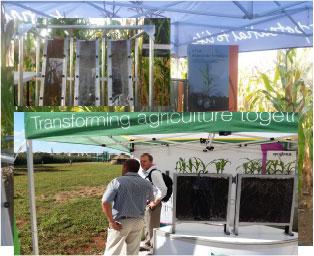
- A technique for root growth observation. The effect of soil-borne root diseases on seedlings. The effect of below ground insects or nematodes on the roots of the seedlings. The effect of various seed treatments on the root development
- Interesting facts: The first root laboratories with vertical glass walls were constructed in Germany, about 1900. In 1960s these structures were called root cellars or root houses
ALREADY ESTABLISHED FOR:
All variety of seeds
HOW IT IS USED
- Rhizotrones are filled preferably with sieved soil
- Seeds are placed at a distance of 5mm, preferably with the radicle emergence pole to the glass wall
- Rhizotrones are fixed at a 30°and the glass is covered with a black PVC

QUICK FACTS
- FOCUS: ROOTS, SEEDLING
- COST: $$
- TIME TO PRODUCE: 2 TO 8 WEEKS DEPENDING ON THE CROP
- MOBILITY: PORTABLE
- LEVEL OF COMPLEXITY: MEDIUM - ONCE PROTOCOL IS DEVELOPED, IT BECOMES ROUTINE PRODUCTION
- ENVIRONMENTAL CONDITIONS: REQUIRES SPECIFIC TEMPERATURE, MOISTURE & LIGHT FOR EACH CROP AND PATHOGEN

CONTACT
wayne.Jansen_van_Rensburg@Syngenta.com
Technology Manager Seedcare(AME)